
The rollout of Windows 10 version 2004, the latest version of Microsoft's operating system at the time of writing, has reached a new phase as of July 22, 2020.
The company revealed that the number of devices running older versions of Windows 10 that will be upgraded automatically to the new version is increasing.
Microsoft released Windows 10 version 2004 at the end of May 2020 to the public. The release was plagued by a number of bugs and new bugs were confirmed in the weeks that followed the release. If you follow the advice that we give, to never install a new feature update right away but wait at least a month or two before the installation, you probably evaded most of the issues of Windows 10 version 2004.
Microsoft changed the way feature updates are offered to customer devices in recent time. Previously, users could hit the "check for updates" button in the Settings app to check for the new version. If offered, it would be installed right away. The change adds another layer of confirmation to the process so that admins need to click explicitly on "download and install" to upgrade the system to the new version.
The only exception to the rule is when systems reach end of support. Windows 10 versions installed on home devices are supported for 18 months by the company while Enterprise customers get 30 months of support of they install the second feature update of the year on devices, and even longer support if they choose the LTSC version of Windows 10.
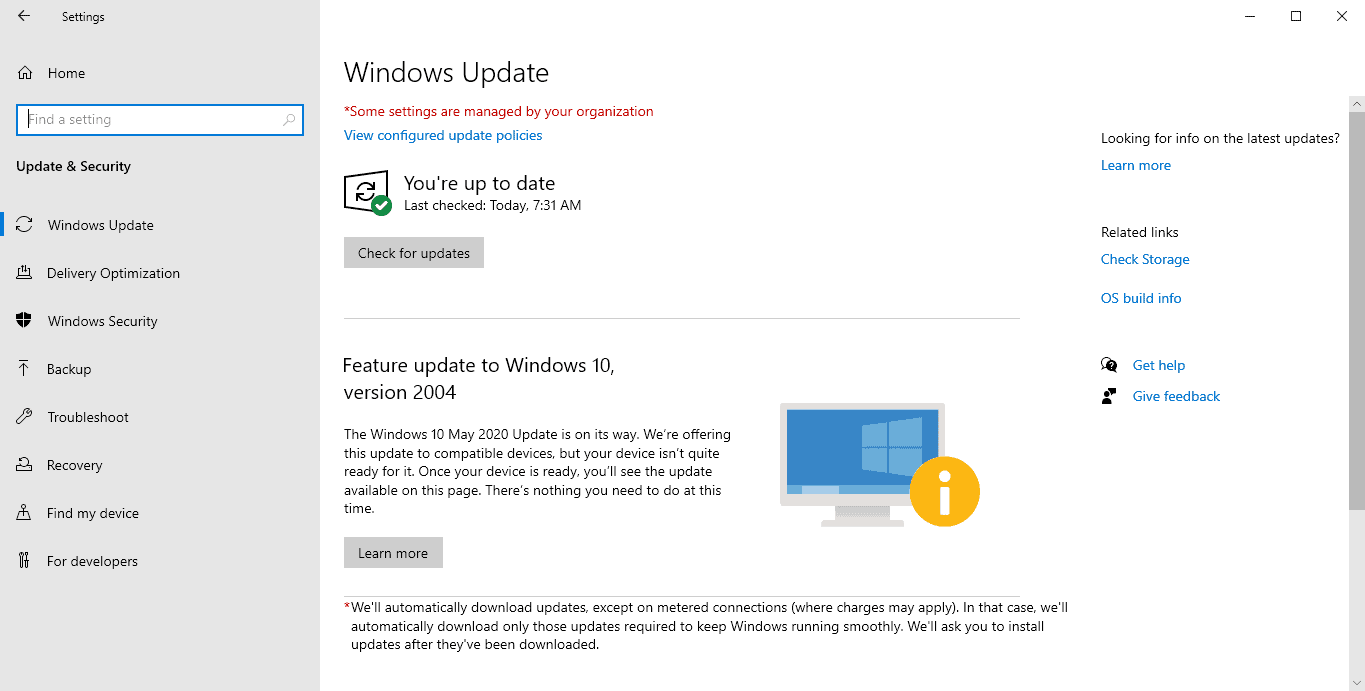
What happens when systems reach end of support? Microsoft tries to push a newer version of the operating system on those devices automatically. The procedure is controversial. Proponents state that the forced installation of updates keeps devices secure as they will continue to receive security updates. Opponents on the other hand that Microsoft does not have the right to install anything by force on their devices.
The update on Windows 10 version 2004's release information page reveals the following information:
Current status as of July 22, 2020
Windows 10, version 2004 is available for users with devices running Windows 10, versions 1903 and 1909, who manually seek to “Check for updates” via Windows Update. We are now starting a new phase in our rollout. Using the machine learning-based (ML-based) training we have done so far, we are increasing the number of devices selected to update automatically to Windows 10, version 2004 that are approaching end of service. We will continue to train our machine learning through all phases to intelligently rollout new versions of Windows 10 and deliver a smooth update experience. The recommended servicing status is Semi-Annual Channel.
In other words: Devices that are still running versions of Windows 10 that will reach end of support soon will be upgraded to Windows 10 version 2004 automatically in the coming weeks. The process has started already, and Microsoft will increase the number of devices selected for the update in the coming weeks.
Microsoft makes no mention of the versions of Windows 10 that will receive the update forcefully. Windows 10 version 1809 runs out of support in November 2020, and it is likely that devices running this version will receive the new update via Windows Update.
Administrators who don't want their devices upgraded automatically need to block Windows Update functionality. It is also possible to install an earlier version of Windows 10, e.g. Windows 10 version 1909, on devices if that is preferred.
Now You: How do you handle operating system upgrades?
Thank you for being a Ghacks reader. The post Microsoft installs Windows 10 version 2004 on more devices automatically appeared first on gHacks Technology News.
☞ El artículo completo original de Martin Brinkmann lo puedes ver aquí

No hay comentarios.:
Publicar un comentario