
On a soccer pitch outside Beijing, the players are humanoid robots. They dribble, fall over, get back up, and occasionally crash into things they should not. This is not a gimmick demo. It is how a growing number of Chinese robotics companies are training machines for real-world use.
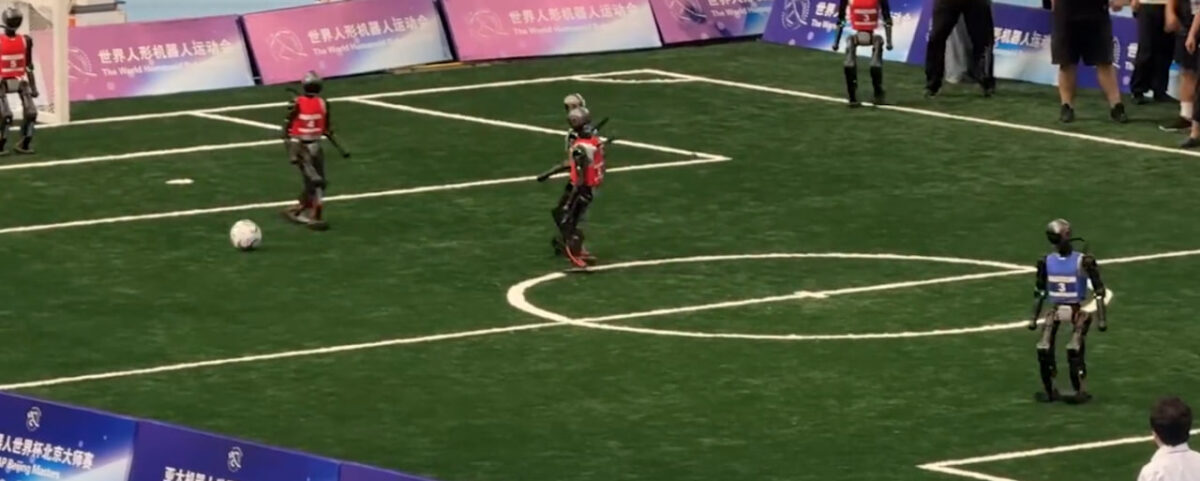
One of them is Booster Robotics, founded in 2023 by Cheng Hao. His company builds humanoid robots designed to play soccer using artificial intelligence. The goal is not entertainment alone. Soccer is a stress test.

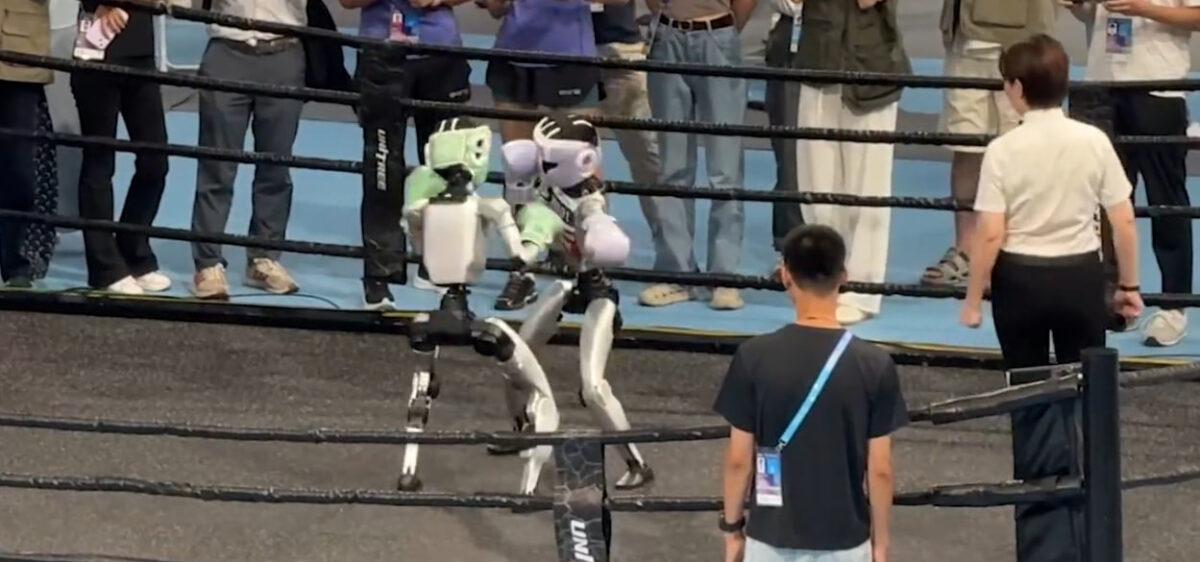
Robot sports have become a proving ground across China. In 2025 alone, humanoid robots danced during the Spring Festival Gala, ran half-marathons, boxed, and competed in the world's first World Humanoid Robot Games in Beijing. Soccer, boxing, sprinting, and even simulated factory tasks were all part of the program.
Sports expose weaknesses quickly. Balance fails, vision systems misjudge distance, and coordination breaks down under pressure. For robotics engineers, those failures are useful. A robot that can run, turn, react, and cooperate with teammates on a field is closer to working safely in unpredictable environments.
Soccer has long been a benchmark task in robotics research. The international RoboCup competition, launched in the 1990s, uses the sport to test motion control, vision, planning, and team coordination. Cheng's team at Booster Robotics treats it the same way. The game is the lab.
The attention helps, too. Robot sports draw crowds, livestreams, sponsors, and investors. Booster Robotics ran an exhibition robot soccer league in mid-2025 that sold hundreds of tickets and attracted national broadcast coverage. Two days after winning RoboCup 2025 in Brazil, the company announced more than $14 million in new funding.

This public-facing angle fits neatly into a broader national push. China has spent the past decade accelerating its robotics industry, backed by subsidies, research funding, and local government support. Humanoid robots are now positioned as a strategic technology, tied to productivity gains and an aging population.
The government's involvement is visible. The World Humanoid Robot Games were co-hosted by Beijing authorities and state media. Regional governments have organized robot marathons and competitions, often paired with investment showcases. For now, the ecosystem still leans heavily on public backing.
The robots themselves are not flawless. At Beijing's games, humanoids ran into referees, missed punches, and collapsed mid-match. Engineers hovered nearby, resetting systems and collecting data. That is part of the process. Each failure feeds the next iteration.
What is changing is where this leads. Companies are already moving robots out of arenas and into factories. Sorting, inspection, and material handling are common test cases. Some humanoids are being trialed in controlled service environments as well.
Booster Robotics is aiming further. Just months after a lab visit, the company launched a smaller humanoid robot designed for broader use, priced far below its earlier competition-focused models. The pitch was straightforward: robots as practical helpers, not lab curiosities.
The idea being sold is familiarity. A humanoid that walks, carries objects, follows instructions, and interacts naturally fits more easily into homes and workplaces than specialized machines. Sports are just the training montage.
The robot sports craze may look playful on the surface, but it is increasingly tied to commercial strategy. The field is crowded, competition is intense, and differentiation matters. For many Chinese startups, turning robots into athletes is a way to turn them into products.
I think robots are the future of not just efficiency, but also entertainment.
Resources:
Thank you for being a Ghacks reader. The post China’s Robot Sports Boom is Turning Humanoids Into Consumer Products appeared first on gHacks Technology News.
☞ El artículo completo original de Arthur K lo puedes ver aquí